Revolutionizing Visuals with Label Stiker Technology Cyberpunk Design and Futuristic HUD Frames
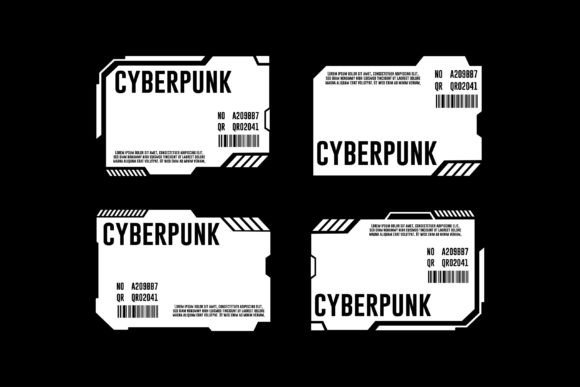
In the rapidly evolving landscape of digital and print design, few aesthetics capture the imagination quite like the cyberpunk genre. It is a visual language defined by high-tech interfaces, neon glows, and gritty urban decay. For designers looking to inject this energy into their projects, the Label Stiker Technology Cyberpunk Design and Hud futuristic frames user interface element vector collection offers a robust toolkit. Whether you are creating packaging for a tech startup, designing a background for a gaming stream, or developing assets for a sci-fi novel cover, these elements provide the perfect foundation.
The versatility of this specific design pack lies in its dual nature: it serves as both a decorative label and a functional interface component. By integrating these vectors into your workflow, you bridge the gap between static imagery and dynamic, interactive-looking graphics. This article explores how these assets function within modern design ecosystems, why they are essential for certain industries, and how to effectively utilize them from the moment you download the file.
The Aesthetic Power of Cyberpunk UI Elements
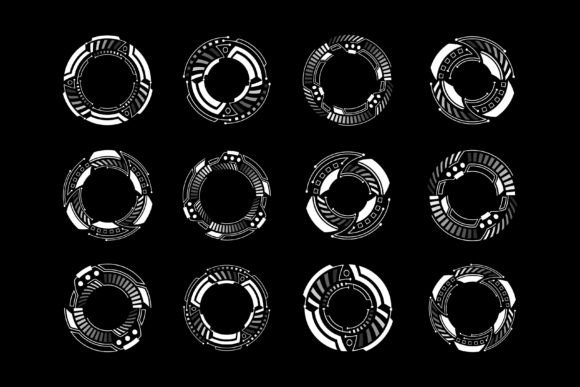
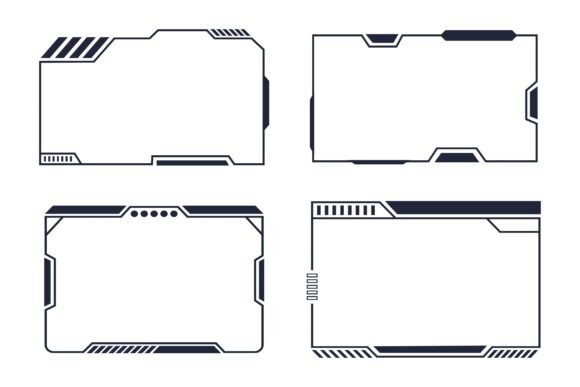
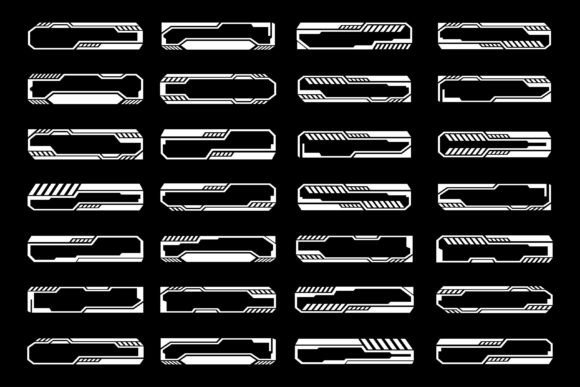
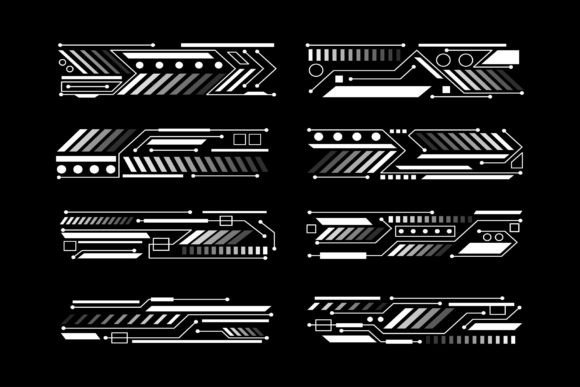
Cyberpunk design is more than just a color palette; it is a philosophy of information density and technological immersion. The Hud futuristic frames included in this collection mimic the complex heads-up displays found in advanced machinery, spacecraft, and military equipment. These frames are not merely borders; they are storytelling devices that suggest a world where data is omnipresent.
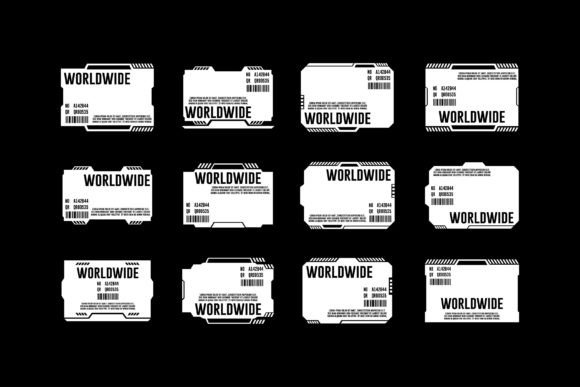
When applied to a Label Stiker Technology Cyberpunk Design, these elements transform ordinary products into premium, high-concept items. Imagine a bottle of energy drink or a box of electronic components. A standard label might list ingredients or specifications, but a label featuring intricate HUD lines, scanning grids, and holographic-style text immediately signals innovation. It tells the consumer that the product inside is cutting-edge, reliable, and part of a future-forward lifestyle.
This aesthetic resonates deeply with several key demographics. Gamers, tech enthusiasts, and fans of speculative fiction are drawn to the visual cues of the cyberpunk genre. By using these vector elements, brands can tap into an existing emotional connection with their audience. The design speaks a language of speed, precision, and digital mastery without needing a single word of copy.
Key Characteristics of the Design Pack
- Modular Construction: The frames and labels are designed to be broken down. You can isolate a corner bracket, a central data readout, or a full border depending on your layout needs.
- Layered Depth: Even in a 2D format, the use of gradients and stroke effects creates an illusion of depth, making the flat design appear three-dimensional and glowing.
- Scalability: As vector files, these elements maintain crisp edges whether printed on a tiny microchip sticker or blown up onto a billboard-sized banner.
- Adaptable Color Schemes: While often associated with neon pinks and cyans, the vector paths allow you to instantly shift the color profile to match any brand identity, from monochromatic stealth modes to vibrant arcade styles.
Seamless Integration into Modern Workflows
One of the most significant advantages of this resource is its compatibility with industry-standard software. The files are delivered in a format that ensures maximum flexibility. When you receive the Label Stiker Technology Cyberpunk Design, you are getting assets ready for immediate manipulation in applications like Adobe Illustrator.
This is crucial for professional workflows. In the past, designers often had to trace raster images or spend hours recreating complex geometric patterns. With this vector set, the heavy lifting is already done. You can import the artwork directly into your project, ungroup the layers, and begin customizing the geometry. Perhaps you need to extend a line to fit a longer product name, or maybe you want to change the angle of a HUD scanner to match the perspective of your 3D render. The vector format makes these adjustments trivial rather than tedious.
Furthermore, the inclusion of JPG formats provides a quick preview option. If you are working in a non-vector environment or need a rapid mockup for a client presentation, the high-resolution JPEGs allow you to visualize the final look without opening a vector editor. This hybrid delivery method caters to different stages of the design process, from initial concepting to final production.
From Download to Deployment: A Practical Guide
Getting started with these assets is straightforward, but understanding the file structure is key to efficiency. Upon purchase, the files are compressed into a single ZIP archive to ensure fast transfer speeds and organized storage. To access the content, you will need to extract the files using standard utilities like WinZIP, WinRAR, or the built-in extraction tools available on most operating systems.
- Download and Locate: Save the ZIP file to a dedicated folder on your desktop or cloud drive.
- Extract the Archive: Right-click the file and select "Extract All" or double-click to open the archive and drag the contents to a new folder. This step decompresses the individual AI (Adobe Illustrator) and JPG files.
- Open in Vector Software: Launch Adobe Illustrator and open the main .AI file. You will likely see multiple artboards or grouped layers representing different variations of the Hud futuristic frames.
- Customize: Use the Direct Selection Tool to modify anchor points, change stroke weights, or swap colors. Because these are true vectors, you can scale them infinitely without losing quality.
- Export for Print or Web: Once your design is finalized, export the artwork in the appropriate format—CMYK PDF for print decoration or RGB PNG for digital backgrounds.
Applications Across Industries and Projects
The utility of the Label Stiker Technology Cyberpunk Design and Hud futuristic frames extends far beyond simple decoration. These elements serve as foundational building blocks for a wide array of creative endeavors.
Product Packaging and Branding
In the competitive world of consumer electronics and supplements, packaging is the primary sales tool. A Label Stiker featuring cyberpunk motifs can differentiate a generic product on a crowded shelf. For instance, a brand selling mechanical keyboard switches could use these frames to create a label that mimics a system diagnostic screen. Similarly, a line of smart home devices could utilize the HUD elements to suggest connectivity and intelligence right on the box.
Digital Media and Game Development
Game developers and UI/UX designers constantly seek assets that convey a futuristic atmosphere. These vector frames are perfect for creating inventory screens, health bars, and mission objective overlays. Because they are vector-based, they can be easily animated in After Effects or integrated into game engines like Unity or Unreal Engine as scalable sprites. The clean lines and geometric precision fit perfectly within the rigid constraints of a game's user interface.
Event Marketing and Merchandise
For events such as tech conferences, comic cons, or music festivals, the cyberpunk aesthetic is a natural fit. Designers can use these elements to create wristbands, badges, posters, and stage backdrops. The ability to modify the design allows event organizers to insert dates, logos, and QR codes seamlessly into the futuristic frames, ensuring that all necessary information is presented within a cohesive visual theme.
Backgrounds and Textures
Beyond foreground elements, these designs work exceptionally well as backgrounds. By layering multiple HUD frames at different opacities and scales, you can create complex, textured environments. This is particularly useful for website headers, social media banners, or video thumbnails where a busy, data-rich background adds visual interest without overwhelming the main content.
Strategic Considerations for Designers
While the Label Stiker Technology Cyberpunk Design offers immense creative freedom, there are practical considerations to keep in mind when adopting these assets.
Readability vs. Decoration: The defining feature of cyberpunk design is complexity. However, when applying these frames to a label or UI, clarity remains paramount. Ensure that the decorative elements do not obscure critical information like barcodes, legal disclaimers, or call-to-action buttons. Use the vector editing capabilities to thin out lines or reduce opacity in areas where text needs to sit.
Color Consistency: While the default neon colors are iconic, they may not align with every brand guideline. Take advantage of the vector format to recolor the entire set to match your corporate identity. A subtle shift from bright cyan to a muted teal can make the design feel more sophisticated while retaining the futuristic edge.
Print Resolution: Since the files are provided as vectors, resolution is rarely an issue for print. However, if you are using the included JPG previews for large-format printing, verify the DPI. For professional results, always rely on the vector source files to generate your final print-ready output.
Empowering Creativity with Professional Assets
The intersection of technology and art is where some of the most compelling design happens today. The Label Stiker Technology Cyberpunk Design and Hud futuristic frames user interface element vector collection empowers creators to push boundaries and explore new visual territories. It removes the technical barrier of creating complex geometric patterns from scratch, allowing designers to focus on composition, storytelling, and brand strategy.
Whether you are a freelance designer looking to expand your portfolio, a marketing team aiming to refresh a product line, or a hobbyist creating fan art, these tools provide a solid foundation. The ease of modification, combined with the striking visual impact of the cyberpunk aesthetic, makes this resource an invaluable addition to any digital library.
By extracting the ZIP file, opening the vectors in your preferred application, and experimenting with the endless possibilities of customization, you can bring a vision of the future to life. From the smallest sticker to the largest digital display, these elements prove that good design is about more than just looks—it is about functionality, adaptability, and the power to communicate a message instantly. Embrace the futuristic frames, modify them to suit your unique needs, and let your creativity define the next generation of visual communication.