Elevating Digital Interfaces with Sci-Fi Futuristic Round HUD Elements
In the rapidly evolving landscape of digital design, the boundary between functional utility and aesthetic immersion is increasingly blurred. Professionals across various sectors are seeking visual languages that communicate sophistication, technological prowess, and forward-thinking innovation. At the forefront of this movement are Sci-fi Futuristic Round HUD Elements. These intricate graphical components, inspired by heads-up displays from science fiction cinema and advanced aerospace technology, have transcended their narrative origins to become essential tools for modern creators, entrepreneurs, and marketers.
The integration of these elements into print, decoration, element design, and background creation represents more than just a stylistic choice; it signals a shift in how audiences perceive brand identity and digital interaction. By leveraging high-quality vector assets, designers can craft interfaces that feel alive, responsive, and deeply engaging. This article explores the significance of these futuristic frames, their practical application in professional workflows, and why they are becoming a staple in the creative toolkit of the future.
The Anatomy of a Modern Heads-Up Display
To understand the impact of Sci-fi Futuristic Round HUD Elements, one must first appreciate their structural complexity. A traditional heads-up display (HUD) was originally designed to allow pilots to view flight information without looking away from their forward view. In the realm of graphic design, this concept has been reimagined as a circular interface component that organizes data, directs focus, and adds a layer of tactical realism to static or dynamic visuals.
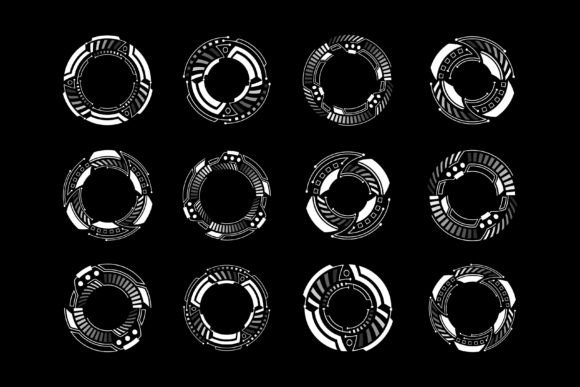
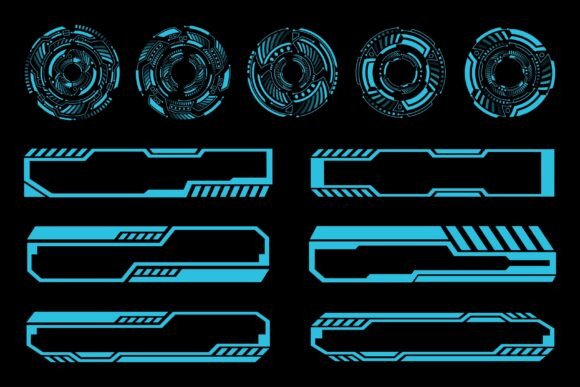
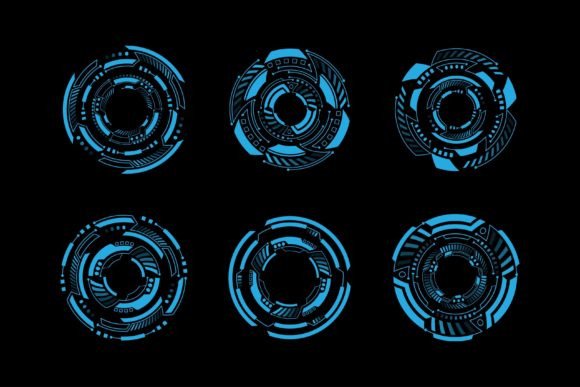
These round elements typically feature concentric circles, rotating arcs, crosshairs, and segmented data rings. They mimic the look of targeting systems, energy monitors, and navigation consoles found in speculative fiction. However, when applied correctly, they serve a distinct purpose: they guide the user's eye through a hierarchy of information while establishing an atmosphere of high-tech precision. Unlike flat, minimalist icons, these elements possess depth and texture, often utilizing gradients, glow effects, and semi-transparent overlays to create a sense of three-dimensional space on a two-dimensional plane.
Why the Circular Form Factor Matters
The prevalence of the round shape in these designs is not accidental. Circles represent wholeness, continuity, and infinite loops—concepts that resonate strongly with themes of connectivity and global networks. In a UI context, a circular HUD frame acts as a focal point, naturally drawing attention to the center where critical data or calls to action reside. For professionals designing dashboards, mobile app backgrounds, or promotional materials, this geometric efficiency offers a powerful way to structure complex information without overwhelming the viewer.
Furthermore, the circular motif aligns perfectly with current trends in wearable technology and smart device interfaces. As screens become curved and interactions become more gesture-based, the organic flow of round HUD elements feels more intuitive and native to the hardware than rigid rectangular blocks. This alignment with physical form factors makes Sci-fi Futuristic Round HUD Elements particularly relevant for brands aiming to project an image of cutting-edge compatibility and user-centric design.
Bridging the Gap Between Concept and Execution
For freelancers and agencies, the ability to quickly prototype and finalize high-fidelity designs is paramount. The availability of these elements in versatile formats significantly streamlines the production workflow. When you acquire a premium pack of these assets, you receive the design in both Vector and JPG formats. This dual-format delivery is crucial for adapting to diverse project requirements, ensuring that whether the output is a massive billboard or a microscopic icon, the integrity of the design remains intact.
The Power of Vector Scalability
The vector format is the cornerstone of professional graphic design. Because vectors are mathematically defined rather than pixel-based, they offer infinite scalability. You can resize a Hud futuristic frame to fit a business card or a stadium screen without any loss of quality. This flexibility is indispensable for entrepreneurs who need to maintain brand consistency across multiple touchpoints. Whether you are creating a logo lockup, a website header, or a product packaging label, the vector file ensures crisp edges and sharp lines every time.
Moreover, the vector nature of these files allows for deep customization using industry-standard software like Adobe Illustrator. Designers are not limited to the colors or configurations provided in the original template. You can modify stroke weights, alter color palettes to match brand guidelines, add new layers of detail, or even deconstruct the elements to build entirely new compositions. This adaptability transforms a static asset into a dynamic building block, empowering creators to tailor the aesthetic precisely to their vision.
Streamlining the Workflow with Compressed Assets
Efficiency in file management is another critical aspect of modern creative work. These design packs are typically compressed into a single ZIP File to ensure easy transfer and organization. Managing large collections of high-resolution images can be cumbersome, but a consolidated archive simplifies the process. To access the contents, users simply need to extract them using standard utilities like Win ZIP, WinRAR, or by performing a direct double-click extraction on most operating systems.
This streamlined delivery method reduces friction in the onboarding phase of a project. Instead of hunting for scattered files, a designer can immediately integrate the entire suite of Sci-fi Futuristic Round HUD Elements into their library. Once extracted, the organized folder structure usually separates the vector source files from the raster previews, allowing for immediate experimentation. This ease of use encourages rapid iteration, enabling teams to test different visual directions and refine their concepts faster than ever before.
Market Trends and Consumer Expectations
The surge in popularity of futuristic interface designs is driven by broader shifts in consumer behavior and market expectations. Today's audience, particularly within the tech, gaming, and crypto sectors, expects digital experiences that feel immersive and interactive. There is a growing fatigue with generic, sterile templates. Consumers are drawn to brands that offer a unique visual identity—one that suggests innovation, speed, and reliability.
The Gamification of Business Interfaces
One of the most significant trends influencing this demand is the gamification of non-gaming applications. From fitness trackers to financial dashboards, businesses are adopting visual cues from video games to make data consumption more engaging. Sci-fi Futuristic Round HUD Elements play a pivotal role here. They transform mundane statistics into mission-critical data points, making the user feel like an operator in a high-stakes environment. This psychological shift increases user retention and engagement, as the interface itself becomes part of the experience rather than just a tool.
Marketers are also leveraging these aesthetics to signal "future-readiness." In industries like artificial intelligence, blockchain, and renewable energy, the use of holographic-style HUD frames communicates that a company is at the forefront of technological advancement. It creates an immediate association with progress and sophistication, helping startups and established enterprises alike to differentiate themselves in crowded markets.
Print and Physical Decorations
While digital applications are the primary use case, the influence of these designs extends into the physical world. Print media, event decorations, and retail environments are increasingly adopting these futuristic motifs. Imagine a trade show booth featuring large-scale prints of Hud futuristic frames that light up or interact with visitors, or a product line packaged with sleek, metallic round graphics that evoke a sense of premium engineering.
The versatility of the vector format makes this transition seamless. High-resolution JPGs derived from the vector sources can be used for large-format printing without degradation. This capability allows entrepreneurs to create cohesive branding campaigns that span both digital and physical realms, reinforcing the brand message through consistent, high-impact visuals. Whether it's a flyer, a poster, or a decorative wall panel, these elements add a layer of visual excitement that captures attention instantly.
Practical Applications for Creators
For the practical application of these assets, consider the following scenarios where Sci-fi Futuristic Round HUD Elements excel:
- Dashboard Design: Integrating round data rings into web or mobile analytics platforms to visualize KPIs in a visually striking manner.
- Gaming UI: Creating health bars, radar scopes, and inventory selectors for indie game developers looking for a polished sci-fi aesthetic.
- Event Branding: Designing stage backdrops and signage for tech conferences that utilize the glowing, layered look of HUD frames to create an immersive atmosphere.
- Social Media Content: Generating eye-catching thumbnails and story backgrounds for tech influencers and crypto analysts to stand out in crowded feeds.
- Product Packaging: Applying metallic and holographic finishes to packaging designs for electronics and gadgets to enhance perceived value.
Each of these applications benefits from the modularity of the design. Because the elements are created with vector editing applications in mind, a designer can isolate specific components—such as a single arc or a corner bracket—and combine them in novel ways. This encourages creativity and prevents the designs from feeling repetitive or templated.
Conclusion: Embracing the Visual Language of Tomorrow
The rise of Sci-fi Futuristic Round HUD Elements is a testament to the enduring power of visual storytelling in the digital age. These are not merely decorative flourishes; they are strategic assets that help professionals communicate complex ideas with clarity and style. By offering a blend of technical precision and artistic flair, they meet the changing needs of a market that demands both functionality and inspiration.
For creators, entrepreneurs, and marketers, the ability to manipulate these elements through vector editing software provides a competitive edge. It allows for the rapid creation of bespoke designs that resonate with target audiences and align with forward-looking brand strategies. As we move further into an era defined by virtual reality, augmented interfaces, and smart ecosystems, the visual language of the HUD will only become more prevalent.
By extracting your ZIP File and exploring the potential of these vector assets, you are equipping yourself with the tools necessary to define the aesthetic of tomorrow. Whether you are refining a user interface, designing a marketing campaign, or decorating a physical space, the integration of these futuristic frames offers a pathway to innovation. Embrace the evolution of design, and let the precision of the round HUD elevate your work to new heights.