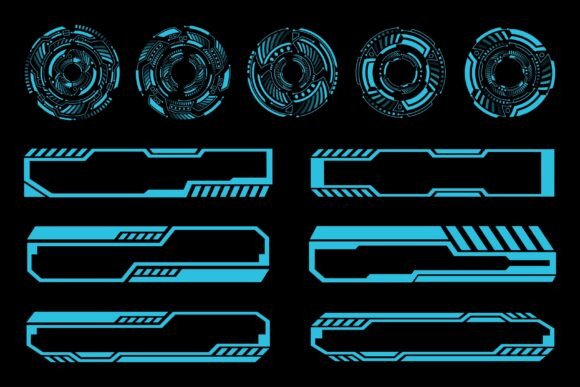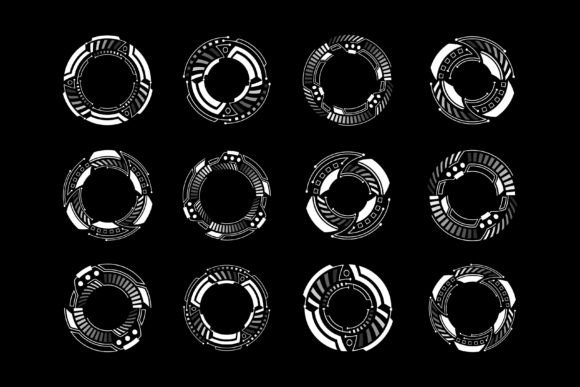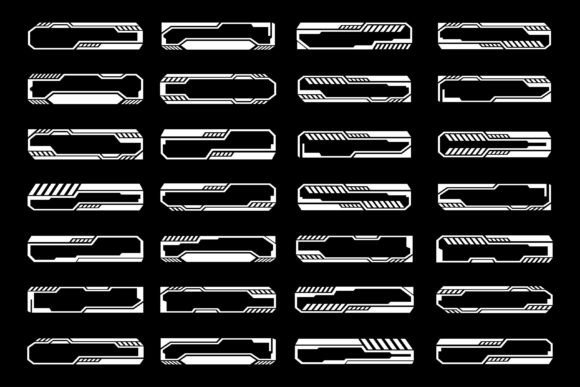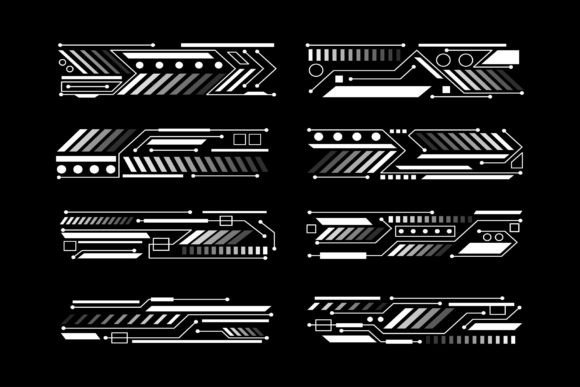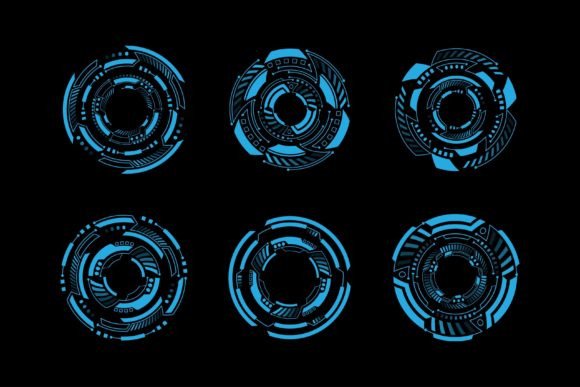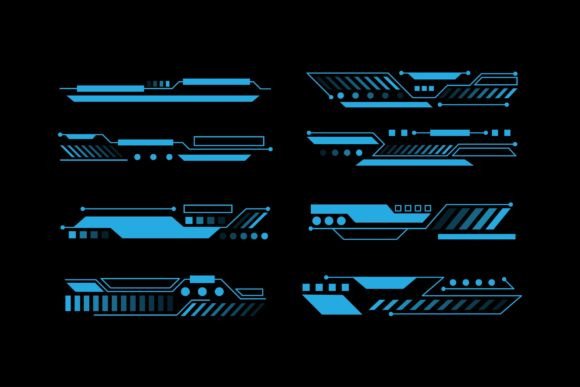
Defining the Next Generation of Visual Language with Futuristic Elements Header Set Interface
In an era where digital experiences are increasingly immersive and competitive, the visual language used to communicate brand identity has evolved beyond static imagery. Professionals across creative industries are turning toward high-fidelity, dynamic assets that suggest innovation and forward-thinking capabilities. At the forefront of this shift is the Futuristic Elements Header Set Interface, a comprehensive design resource that combines advanced vector graphics with HUD (Heads-Up Display) aesthetics to create striking visuals for both print and digital applications.
This collection is not merely a set of clip art; it represents a fundamental toolkit for modernizing user interfaces, marketing collateral, and decorative backgrounds. By integrating these elements into your workflow, you align your projects with current technological trends while ensuring scalability and professional polish. Whether you are a graphic designer crafting a new website header, a marketer developing a campaign deck, or an entrepreneur building a tech startup's brand identity, understanding how to leverage these assets is crucial for standing out in a saturated market.
The Architecture of Modern Visual Communication
To understand the value of the Futuristic Elements Header Set Interface, one must first look at the broader context of design evolution. The aesthetic of the "future" has shifted from the chrome-and-neon cyberpunk tropes of the 1980s to a more sophisticated, data-driven minimalism seen today. This style, often referred to as Sci-Fi UI or HUD design, emphasizes clarity, information density, and geometric precision. It mimics the interfaces found in advanced avionics, autonomous vehicles, and augmented reality systems.
These designs rely heavily on vector technology. Unlike raster images, which degrade when scaled, vector graphics are mathematical descriptions of shapes, allowing them to be resized infinitely without losing quality. This makes the Futuristic Elements Header Set Interface particularly valuable for professionals who need assets that function equally well on a massive billboard or a compact mobile screen. The ability to modify these designs using vector editing applications like Adobe Illustrator ensures that every element can be tailored to specific brand guidelines, color palettes, and layout requirements.
Bridging the Gap Between Digital and Physical Media
One of the most significant advantages of this interface set is its versatility across mediums. While the term "interface" typically conjures images of screens and software, the underlying geometry and aesthetic principles translate exceptionally well to print media. A futuristic HUD frame can serve as a compelling border for a technical manual, a dynamic background for a product brochure, or a structural element in a trade show display.
For print designers, the inclusion of high-resolution JPG formats alongside editable vector files offers flexibility. The JPG versions provide immediate preview capabilities for mockups and client presentations, while the vector source files allow for precise adjustments during the pre-press phase. This dual-format delivery system streamlines the workflow, reducing the friction between concept and final production. It acknowledges the reality of modern creative work, where speed and adaptability are just as important as artistic vision.
Market Trends Driving the Demand for Tech-Aesthetic Assets
Why are creatives and businesses paying such close attention to these specific design elements? The answer lies in the consumer's changing perception of technology. As artificial intelligence, blockchain, and IoT become integral parts of daily life, audiences expect brands to reflect a level of technological sophistication. A dated, flat design may signal stagnation, whereas a sleek, futuristic interface suggests innovation and competence.
Key industry trends include:
- The Rise of Immersive Experiences: With the growth of VR and AR, users are accustomed to seeing data overlaid on their environment. Incorporating HUD-style frames into web headers or app interfaces creates a familiar, intuitive feel for tech-savvy consumers.
- Data Visualization Aesthetics: Businesses are moving away from simple charts toward complex, interactive dashboards. The geometric lines and modular components found in the Futuristic Elements Header Set Interface mirror the structure of real-time data streams, making them perfect for fintech, healthtech, and analytics platforms.
- Gaming Culture Influence: The visual language of video games has bled into mainstream design. Gamers appreciate high-fidelity UI elements, and non-gamers associate this aesthetic with cutting-edge entertainment and performance.
Entrepreneurs and marketers are leveraging these trends to differentiate their products. In a crowded marketplace, a unique visual identity can be the deciding factor for a potential customer. By utilizing a cohesive set of futuristic elements, brands can establish a consistent tone that resonates with a forward-looking audience.
Optimizing Workflows with Vector-Based Flexibility
The practical application of these assets hinges on the ability to customize them. The Futuristic Elements Header Set Interface is delivered in a compressed ZIP file containing both vector and raster formats. This packaging method is standard for professional asset distribution, ensuring efficient download speeds and organized file structures. Upon extraction using tools like WinZIP, WinRAR, or simply by double-clicking the archive, users gain access to a library of modifiable components.
For those working within the Adobe ecosystem, the vector files open directly in Illustrator. This opens up a world of possibilities. You are not limited to using the elements as-is; you can deconstruct the layers, alter stroke weights, change fill colors, and integrate custom typography. Perhaps you need to adjust the curvature of a HUD corner to match your logo, or you want to animate a specific line segment for a web banner. The vector format empowers you to make these changes without compromising the integrity of the design.
Consider the following workflow scenarios:
- Brand Adaptation: A startup in the renewable energy sector uses the base futuristic frames but modifies the color scheme from neon blue to eco-friendly greens and teals, instantly creating a bespoke look that fits their niche.
- Responsive Web Design: A web developer extracts specific header elements to create lightweight SVG icons and backgrounds that load quickly and scale perfectly across all devices.
- Print Collateral: A marketing agency expands the vector paths to ensure crisp edges on large-format posters, adding subtle gradients that would be lost in a lower-resolution image.
The Importance of File Management and Extraction
A critical, yet often overlooked aspect of using professional design assets is proper file management. Because these collections are often extensive, they are compressed into ZIP archives to maintain organization and reduce bandwidth usage. Users must extract these files correctly to access the full suite of resources. Failure to do so can result in missing layers or corrupted previews. Using reliable extraction software ensures that the directory structure remains intact, preserving the relationship between the master vector files and their associated JPG previews.
This attention to detail reflects the professionalism required in the creative industry. Just as a well-designed interface guides a user through a digital experience, a well-organized file structure guides a designer through the creation process. It minimizes technical hurdles, allowing the creator to focus on the artistic and strategic aspects of the project.
Strategic Application in Creative Projects
The true power of the Futuristic Elements Header Set Interface lies in its strategic application. It is not enough to simply paste a cool-looking frame onto a page; the elements must serve a purpose. They should guide the viewer's eye, frame important information, or reinforce the narrative of the content.
For example, in a corporate presentation about cybersecurity, using a HUD-style header immediately establishes a theme of protection, monitoring, and advanced defense. The angular lines and segmented circles subconsciously communicate structure and vigilance. Similarly, in a lifestyle blog focused on smart home technology, these elements can create a sense of connectivity and automation, bridging the gap between the written word and the visual promise of the future.
Furthermore, these elements encourage experimentation. Designers can layer multiple components to create depth, use transparency to blend with background photography, or animate them to add motion to static layouts. The modular nature of the set allows for endless combinations, ensuring that no two projects look exactly alike. This adaptability is essential for freelancers and agencies who must deliver unique solutions for diverse clients.
Looking Ahead: The Evolution of Interface Design
As we move further into the digital age, the distinction between physical and virtual environments continues to blur. The design tools and assets we use today will shape the visual culture of tomorrow. The Futuristic Elements Header Set Interface represents a snapshot of this transition—a toolkit that captures the essence of modern technology while remaining flexible enough to evolve with it.
Professionals who embrace these assets are positioning themselves at the vanguard of design innovation. They are acknowledging that the future is not just something to be predicted, but something to be designed. By mastering the use of vector-based HUD elements, creators can produce work that is not only visually stunning but also deeply relevant to the needs and expectations of a tech-centric world.
Whether you are refining a personal portfolio, launching a new product, or rebranding an established enterprise, the integration of these futuristic elements can elevate your output. They offer a pathway to creating designs that are clean, functional, and undeniably modern. In a landscape defined by rapid change, having access to versatile, high-quality design resources is not just an advantage—it is a necessity.
Ultimately, the goal is to create experiences that resonate. The Futuristic Elements Header Set Interface provides the raw materials to build those experiences, offering a bridge between imagination and execution. As you explore the possibilities within the extracted files, remember that the most powerful designs are those that tell a story, solve a problem, and inspire confidence in the viewer. With the right tools and a forward-thinking mindset, the future of your creative work is limitless.