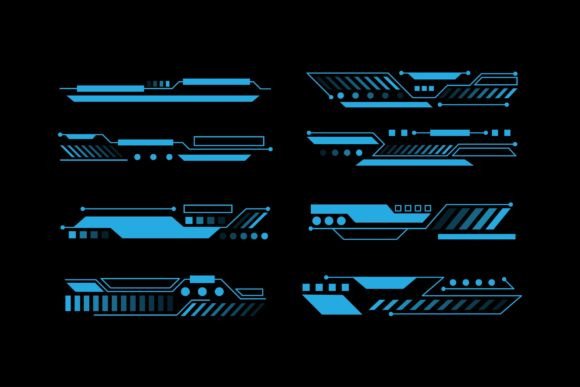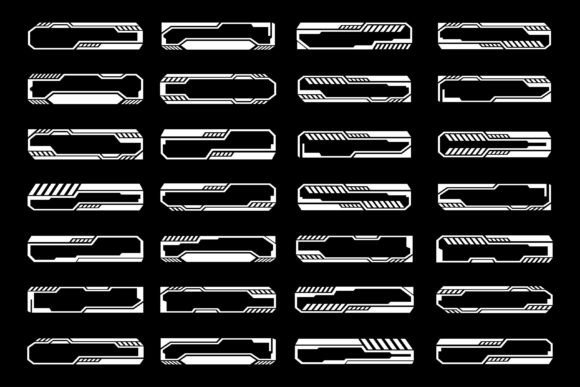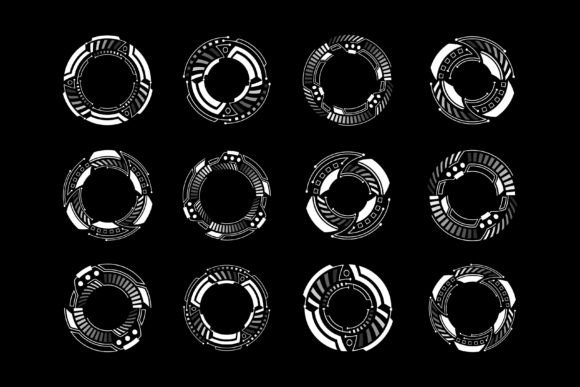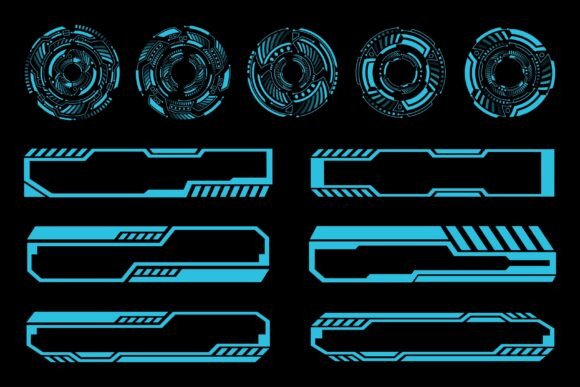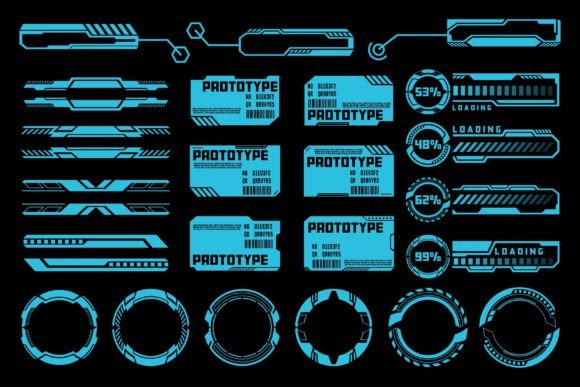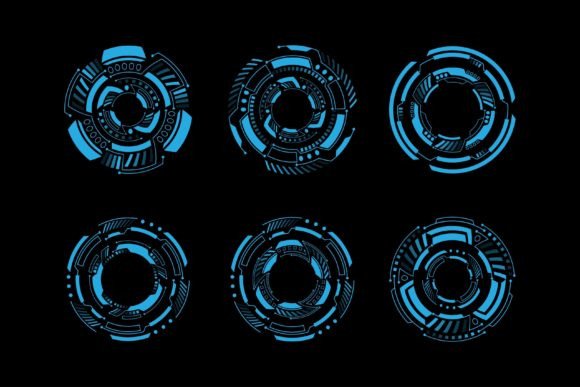
HUD Futuristic Sci-fi Interface Elements
In the realm of digital design, few aesthetic categories command as much immediate attention as futuristic user interfaces. These designs transport viewers from the mundane present into a speculative future where technology is seamless, advanced, and visually striking. The collection known as HUD Futuristic Sci-fi Interface Elements provides exactly this kind of visual vocabulary. It is not merely a set of decorative graphics; it is a toolkit for creators who need to communicate complexity, high-tech capability, or immersive storytelling through visual language. Whether you are designing a video game overlay, creating a presentation slide deck for a tech startup, or crafting a background for a music festival poster, these elements serve as the building blocks for a modern, forward-thinking aesthetic.
The appeal of these interface components lies in their ability to suggest functionality without requiring actual code. A glowing line, a rotating data ring, or a translucent panel with scan lines immediately signals "future" to the audience. This psychological shortcut allows designers to establish tone instantly. When you integrate these HUD frames into your work, you are leveraging years of sci-fi cinema and gaming evolution to create an atmosphere of sophistication and innovation. The versatility of the design means it can be stripped back for a minimalist look or layered heavily for a dense, cyberpunk feel, depending on the specific needs of your project.
Unlocking Creative Possibilities in Design
The true power of HUD Futuristic Sci-fi Interface Elements becomes apparent when you consider the breadth of applications available to a skilled designer. At its core, this asset pack offers vector-based frames that act as containers for content. However, thinking of them only as borders limits their potential. These elements can be deconstructed, recolored, and reassembled to form entirely new compositions. For instance, a single corner bracket can be rotated and mirrored to create a dynamic crosshair, while a series of data bars can be animated to simulate real-time processing in a motion graphic.
For print designers, these vectors offer a distinct advantage over raster images. Because the files are scalable, you can use a small icon on a business card and then scale the same element up to cover a billboard without losing any clarity or sharpness. This scalability is crucial for maintaining professional quality across different media. Imagine a marketing campaign for a drone company where the product shots are framed by sleek, holographic HUD lines. The result is a cohesive brand identity that feels cutting-edge and reliable. Similarly, event planners can use these backgrounds to transform standard conference materials into something that feels like an exclusive briefing from a space station.
Beyond static layouts, these elements open doors for interactive design. Web developers and UI/UX professionals can adapt the shapes and colors to create custom cursors, loading animations, or dashboard widgets. The geometric precision of the original vector files ensures that they align perfectly with grid systems used in modern web frameworks. By tweaking the opacity and blending modes, you can make the interface elements appear as if they are floating above the content, adding depth and dimension to a flat screen.
Practical Applications for Diverse Audiences
Different users will find unique value in these assets based on their specific goals. For entrepreneurs and small business owners, particularly those in the tech sector, these elements provide a way to elevate their visual presence without hiring a full-time creative team. A simple PowerPoint presentation about cloud computing solutions becomes significantly more engaging when the data points are presented within a futuristic frame. It suggests that the company is at the forefront of industry trends.
- Freelancers and Marketers: Use these frames to create standout social media posts. In a feed filled with standard photos, a post featuring a product inside a sci-fi HUD border grabs attention and encourages clicks.
- Educators and Trainers: Incorporate these designs into training manuals or e-learning modules to make technical subjects feel less dry. A complex process flow chart looks more approachable when styled as a mission control display.
- Hobbyists and Gamers: Streamers can use these elements as overlays for their Twitch broadcasts, displaying viewer counts, chat messages, and donation alerts within a cohesive thematic interface.
Bloggers and publishers also benefit from the narrative potential of these designs. If you write about science fiction literature, emerging technologies, or gaming culture, using these interface elements as section dividers or header backgrounds reinforces the theme of your content. It creates an immersive reading experience that keeps the audience engaged longer.
Mastering the Workflow: From ZIP to Masterpiece
Acquiring the design is just the first step; knowing how to handle the files is essential for maximizing their utility. The package arrives as a compressed ZIP file containing both Vector and JPG formats. To access these resources, you must extract them using software like WinZIP, WinRAR, or the built-in extraction tools found in most operating systems. Simply double-clicking the file usually triggers the extraction process, revealing the organized folder structure inside.
Once extracted, the real work begins. The inclusion of vector files is the most critical feature of this package. Unlike JPGs, which are fixed-resolution images, vector files (typically in AI or EPS format) consist of mathematical paths. This means you can open them in a vector editing application like Adobe Illustrator and modify every aspect of the design. You can change the stroke width of a line, alter the color palette to match your brand guidelines, or even delete unnecessary parts of a frame to fit a specific layout.
This editability empowers you to maintain consistency across your projects. If you have a corporate blue and silver color scheme, you can update all the HUD elements to reflect that instantly. You are not stuck with the default neon greens and cyans often associated with sci-fi; you can adapt the aesthetic to be warm, dark, monochromatic, or vibrant. The ability to customize ensures that the final output feels original rather than generic.
Ensuring Clarity and Consistency
While the freedom to modify is exciting, it requires discipline to keep results clear and effective. A common pitfall in futuristic design is clutter. Because these interfaces are rich in detail, there is a temptation to fill every inch of the canvas. However, the most effective designs utilize negative space to let the content breathe. When applying HUD Futuristic Sci-fi Interface Elements, focus on hierarchy. Use larger, bolder frames for primary information and subtler, thinner lines for secondary details.
Consistency is another key factor. Choose a limited set of elements from the pack and stick to them throughout your project. Mixing too many different styles—such as combining angular, aggressive brackets with soft, rounded data rings—can create a disjointed look. Instead, select a cohesive subset that supports your overall vision. Pay attention to alignment and spacing. Even in a chaotic-looking sci-fi interface, the underlying structure should be logical and organized.
Finally, always consider your audience's context. While a high-contrast, glowing interface works well on a dark website background, it might struggle to read on a light-colored printed brochure. Adjust the contrast and transparency of the elements to ensure legibility in every environment. By balancing inspiration with practical constraints, you can transform these raw assets into polished, professional designs that truly resonate with your viewers.